


01
I’ve always needed to make things.
I’ve always been creative.
As a child, I drew constantly and was always looking at things closely, trying to understand how they worked and how I might make something of my own.
Drawing and painting never quite became the thing I wanted them to be.
Photography did.
My first cameras were simple plastic point-and-shoot cameras in the 1970s. Years later, when digital photography arrived, I bought a tiny two-megapixel Sony.
I loved it — but almost immediately became frustrated by what it couldn’t do.
I wanted more control. I wanted the photograph in my head to look like the photograph I took.
02
Learning photography
Eventually I bought a Nikon D100, my first proper digital camera.
At the time, I thought I knew what I was doing.
I didn’t.
By chance, I joined a City & Guilds evening course in photography. It was taught using film cameras, which meant learning everything properly from the beginning — exposure, aperture, shutter speed, composition, film and darkroom printing.
I loved the whole process.
I completed the year with distinctions in all three modules and went on to take further courses.
The technical side could be learnt.
I think the instinct to look had always been there.


03
Fifteen years behind the camera
Photography gradually became my profession, almost by accident.
At the time, I was working in a technical role and took my camera along to a large corporate event. I started photographing the people, the atmosphere and everything happening behind the scenes. At the end of it, they asked if I could come back the following year and shoot the event properly.
That one job turned into fifteen years of professional photography.
Over the years I photographed conferences, concerts, performances, corporate events and all sorts of people in all sorts of places — London, Cannes, Barcelona, Toronto, Hawaii and plenty in between.
Some of it was huge auditoriums and stages. Some of it was quiet moments in corridors, backstage, or out on the street between jobs.
What I loved was the variety of it — the need to keep looking, keep moving and keep noticing what was happening.
For fifteen years, the camera was never far from my hand.
SELECTED WORK - 15 YEARS
EVENTS
MUSIC
PEOPLE
PLACES
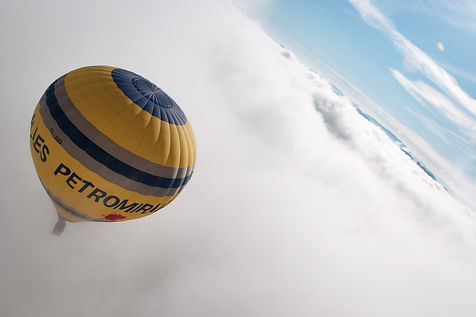


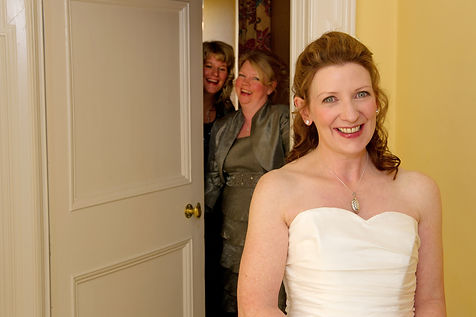


04
Finding photography again
Eventually, rheumatoid arthritis made the physical demands of professional photography too difficult. The long days, heavy cameras and constant movement became harder and harder, and after fifteen years I had to stop.
Later, I moved from London to Bognor Regis. I had always loved the sea, and gradually I began to wonder whether photography could become part of my life again — not as a job, but simply because I loved doing it.
I sold the large DSLR equipment and moved to a smaller Nikon mirrorless setup.
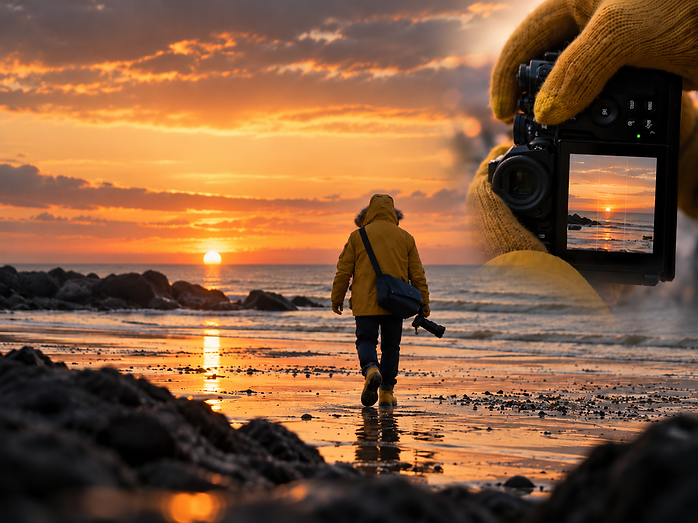
Then I started taking a camera with me in the mornings. On the way to swimming, I’d stop at the beach and see what the light was doing.
That small habit changed everything.

05
Before the world wakes
Most mornings now, before the town is properly awake, I’m somewhere along the West Sussex shoreline. Bognor Regis. Felpham. Aldwick. Sometimes further along the coast when the conditions are right.
Some mornings the sky turns red before the sun has even broken the horizon.
Others are flat grey, with nothing dramatic happening at all.
I go anyway.
Over time, you start to understand the coast differently — where the sun rises through the seasons, how the tides change the beach, and how quickly the weather can transform the sky.
I’ve photographed summer sunrises before five in the morning and stood on the beach at minus two in winter waiting to see if the clouds would move.
That unpredictability is what keeps me going back.
06
From the beach to your wall
Bognor Regis doesn’t always have the best reputation.
Part of the reason I started sharing these photographs was to show another side of it. When you’re standing on the beach before sunrise, with the shoreline almost empty and the sky changing above you, this stretch of coast can be extraordinary.
Coastal Mornings grew out of that habit — a record of the West Sussex shoreline at first light, across different seasons, weather and moods.
The prints are made by theprintspace in London using a traditional C-type photographic process. There isn’t a studio or a team behind this.
It’s one person, one camera and a lot of early starts.
And if one of those mornings stops you for a moment — if a particular sky, stretch of sea or quality of light feels familiar — that’s probably the one to put on your wall.
